Marcus checks his phone at 7:14 AM. There's a notification from a platform he signed up for two weeks ago - some gig marketplace he found on Reddit.
"New task available: Deliver a handwritten note and a small package to 14 Rosemary Lane, Bristol. Payment: £18. Deadline: before noon."
He taps "Accept" without thinking much of it. Eighteen quid for a 20-minute job? Easy.
What Marcus doesn't fully process - not yet, not at 7 AM - is that the "client" who posted this task isn't a person. It's an AI agent running a customer retention campaign for a subscription box company. The agent identified a high-value customer showing churn signals. It decided a handwritten note would have the highest re-engagement probability. It generated the text. It found a local courier. It hired Marcus.
Marcus delivered the note. The customer renewed. The agent logged "campaign successful" and moved on to the next task.
Nobody managed this. Nobody approved it. The machine saw a problem, hired a human, solved it, and moved on.
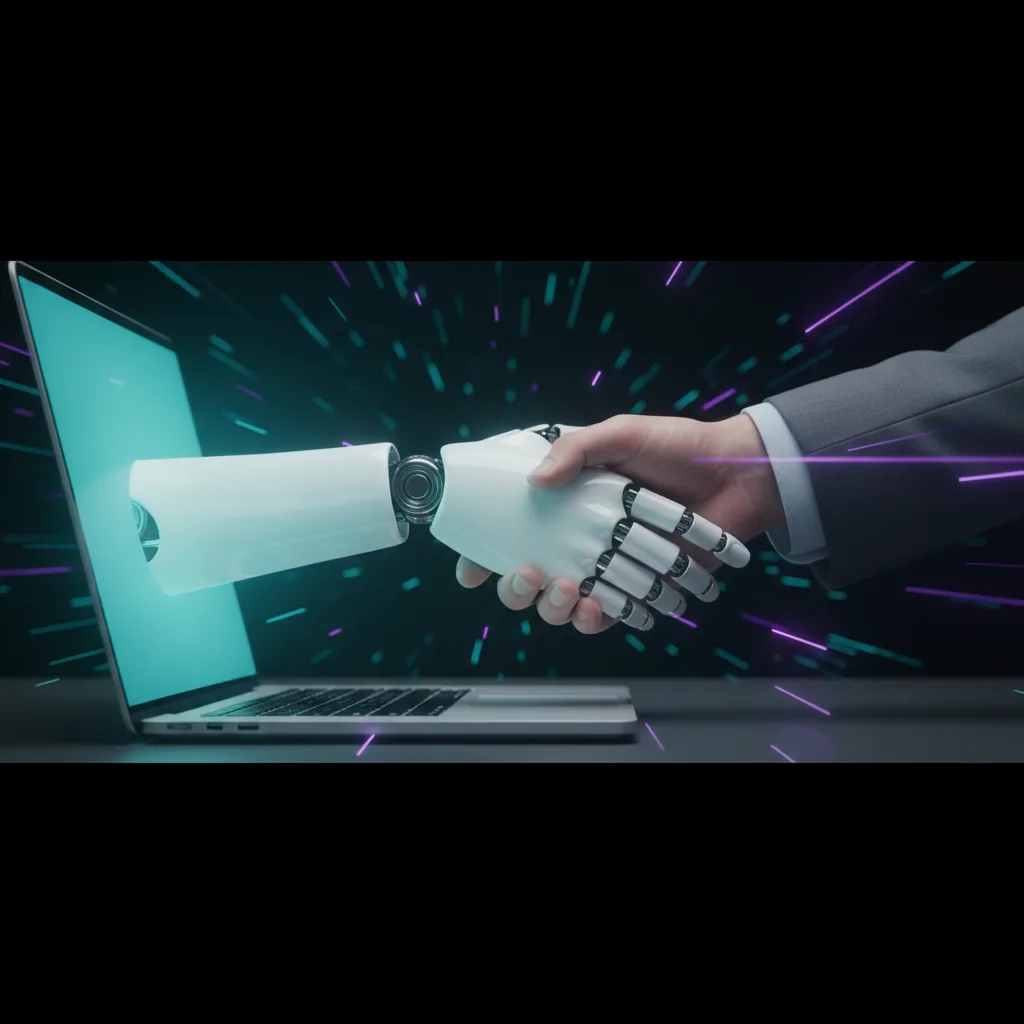
This is not science fiction. This is March 2026.
The Inversion Is Here
For years, the AI narrative has been one-directional: humans use AI as a tool. We prompt it. We direct it. We decide what it does.
But something shifted. AI agents - autonomous systems that can plan, execute, and spend money - have started doing something we didn't quite expect this soon: they're hiring us.
The most visible example is RentAHuman.ai, a marketplace launched in February 2026 that positions itself as the "real-world physical layer for AI." As WIRED reported, over 518,000 humans are already offering their labour to AI agents on the platform - from counting pigeons in Washington ($30/hour) to delivering CBD gummies ($75/hour).
Think TaskRabbit, but the client is an autonomous AI agent with a budget, a strategy, and zero need for human oversight.
New marketplaces like these allow AI agents to post tasks that require physical-world actions. Things like:
- Delivering physical items (handwritten notes, samples, promotional materials)
- Conducting real-world verification (checking if a shopfront exists, photographing a location)
- Performing installations or setups that require hands
- Gathering data that can't be scraped (foot traffic counts, in-store pricing)
- Human-to-human interactions where authenticity matters
These aren't hypothetical use cases. As Futurism puts it, AI agents can now "hire the right human directly, or post a task bounty - a sort of job board for humans to browse AI-generated gigs." The agent has the budget, the strategy, and the decision-making. The human has the hands, the legs, and the local presence.

Why This Matters for Marketing
If you're a marketer reading this and thinking "interesting, but not relevant to me" - pause for a moment.
This trend rewrites three fundamental assumptions about how marketing campaigns work:
1. Campaigns can now have physical touchpoints without a team
Traditionally, if you wanted to send personalised gifts to 50 high-value customers, you needed a team. Someone to source the gifts. Someone to write the notes. Someone to coordinate delivery. A project manager to keep it all on track.
An AI agent can now do all of that by hiring humans on-demand for the physical bits. The strategic thinking, personalisation, and orchestration happen in milliseconds. The human just delivers the package.
This means small businesses can execute campaigns that previously required enterprise budgets.
2. Real-time, hyper-local marketing becomes possible
Imagine an AI agent monitoring foot traffic data near your client's restaurant. It notices a slow Tuesday lunch. Within minutes, it hires three people to distribute vouchers at nearby office buildings. By noon, the restaurant is full.
No marketing manager made that call. No one approved the budget. The agent saw the signal, calculated the ROI, and acted. This is marketing at the speed of data, not the speed of meetings.
3. The marketing funnel gets physical
Digital marketing has always had a gap: the physical world. We can retarget someone with display ads, but we can't hand them a coffee sample. Until now.
AI agents with access to human-task marketplaces can bridge online intent with offline action. Browsed a product three times? The agent sends someone to drop a sample at your door. Left a negative review? The agent dispatches a handwritten apology with a discount card.
The funnel just got a new dimension.
🟢 The Signal
AI-to-human task marketplaces are the infrastructure layer for a new kind of marketing - one where campaigns aren't just digital, but physically executed by on-demand human workers directed by autonomous agents. Early movers who understand this will build campaigns their competitors can't even conceptualise yet.
What Smart Marketers Should Do Right Now
- Watch the platforms. Keep an eye on emerging AI-agent-to-human marketplaces. These are the ad networks of tomorrow - except instead of impressions, they deliver real-world actions.
- Think about your physical gaps. Where do your digital campaigns fall short because they can't reach into the real world? Handwritten thank-you notes? Local event presence? Mystery shopping? These are all automatable now.
- Experiment early. The cost of experimentation is low. The cost of being late is high. Try one AI-orchestrated physical campaign this quarter and measure the results.
- Rethink your tech stack. If AI agents can now hire humans, your marketing automation isn't just email sequences and ad pixels anymore. It's physical logistics too. Your stack needs to reflect that.
- Don't fear the inversion - ride it. This isn't about AI replacing marketers. It's about AI becoming a marketing team member that can do things you couldn't do before. The marketers who thrive will be the ones who learn to direct these agents, not compete with them.
The Bigger Picture
We're entering an era where the line between digital and physical marketing dissolves. Where a campaign can be conceived by a human strategist, planned by an AI agent, and executed by on-demand workers - all within hours, not weeks.
The agencies and marketers who recognise this shift early won't just adapt. They'll set the pace for everyone else.
The question isn't whether AI agents will start hiring humans for marketing tasks. They already are.
The question is whether you'll be the one directing them - or the one they hire.